
Portugal’s most famous musical evening—fado—has two very different worlds. Lisbon fado is an urban tradition shaped by fado houses and late-night atmosphere. Coimbra Song (also called Fado de Coimbra or Canção de Coimbra) is more solemn and serenade-like, closely tied to university life and night-time performances.
This guide helps you choose the experience that matches your travel style, so your evening feels authentic, calm, and worth your time.
- At a Glance: Top Differences Lisbon's Fado and Fado de Coimbra
- First: the names (and why they confuse travellers)
- The real differences you’ll feel on the night
- How to plan the right evening without overthinking it
- What “good etiquette” looks like in both
- Quick decision guide
- Fado Etiquette (Luxury-Friendly, No Stress)
- Ready to Plan Your Coimbra Song Evening?
- FAQ: Coimbra Song (Fado de Coimbra) — What to Expect
- More Coimbra Travel Guides
- Explore Fado Guides in Portugal
At a Glance: Top Differences Lisbon’s Fado and Fado de Coimbra
- Lisbon fado: fado houses, intimate rooms, often paired with dinner; widely associated with Lisbon’s urban tradition.
- Coimbra Song: serenade essence, academic tradition, typically performed at night; often linked to students and formal dress.
- Quick decision: choose Lisbon for a classic “night out” with options; choose Coimbra for a more ceremonial, poetic atmosphere.
To keep this guide genuinely useful and consistently high-end, we apply a small set of non-negotiable criteria when selecting Coimbra Song (Fado de Coimbra) experiences—whether that’s a short, focused serenade-style performance or a more formal academic-season event.
- Performance & Musicianship Quality: Coimbra Song relies on voice, poetry, and Portuguese guitar. We prioritise performers with clear diction, emotional control, and strong musicianship—so the experience feels moving rather than theatrical.
- Atmosphere & Respect (Intimacy Matters): Coimbra’s tradition depends on quiet attention. We favour settings that protect the mood—small venues or appropriate outdoor settings, respectful silence during songs, and a sense of ceremony that never feels forced.
- Tradition Fit (Coimbra, Not “Lisbon in Another City”): We select experiences that reflect Coimbra’s/academic character—serenade-like pacing, a more solemn tone, and (when relevant) the classic academic styling—rather than generic “fado dinner shows.
- Pacing & Evening Flow: The best Coimbra nights feel simple and contained. We prefer 50–60 minute performances that pair naturally with dinner before or after, instead of long programmes that dilute the atmosphere.
- Comfort & Logistics: Coimbra’s historic centre has hills and steps. We prioritise experiences with clear meeting points, easy access from central hotels, and timing that works for travellers who want a calm evening (especially if you’re arriving on a day trip).
- Clarity & Transparency: We value organisers and venues that explain exactly what you’re booking—duration, language/context, seating or standing expectations, photography rules, and how the evening typically runs—so you can plan confidently and stay unhurried.
A quick note on how we decide what to feature—and how partner links fit into this guide.
This guide is curated on merit. We select experiences based on research, reputation, and the quality of the guest outcome—not paid placement. Recommendations cannot be bought, and inclusion is never guaranteed in exchange for compensation.
Some links in this article may be partner or affiliate links. If you choose to book through them, we may earn a small referral benefit—at no extra cost to you. This does not influence which providers are featured, how options are described, or how we rank what stands out.
First: the names (and why they confuse travellers)
You’ll hear Fado de Coimbra, Coimbra Song, and Canção de Coimbra used interchangeably. Many local and tourism sources describe it as distinct from Lisbon fado—more like a serenade tradition, performed in streets and squares at night, with themes of love, longing, the city, and academic life.
Meanwhile, the UNESCO listing for “Fado, urban popular song of Portugal” is explicitly framed around communities and practice in Lisbon.
The real differences you’ll feel on the night
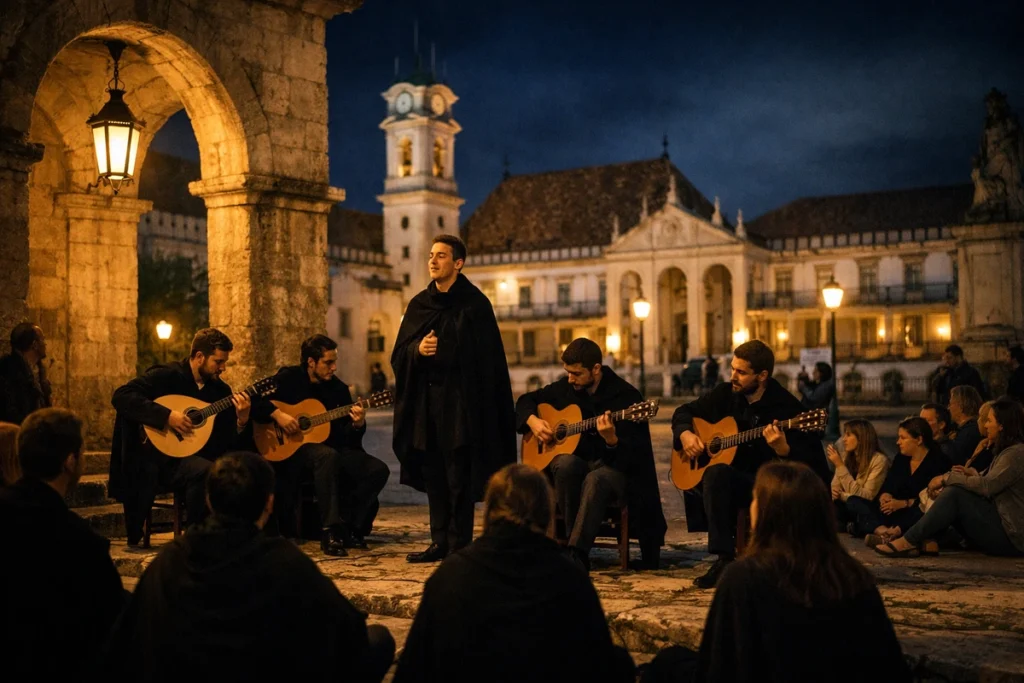
1) Setting and atmosphere
Lisbon fado is often experienced in fado houses (some are dinner-focused, some are show-focused). The mood is intimate but social: you arrive, settle in, and the room quiets when singing begins.
Coimbra Song leans ceremonial: it’s traditionally connected to the university culture and a serenade-like format, often performed at night in outdoor spaces (and also in small venues that preserve that feel).
2) Who performs (tradition)
In Coimbra, the tradition is strongly associated with male performers and academic dress, including the black cape. (Modern practice varies, but the classic expectation remains part of the identity.)
Lisbon fado is not defined by academic tradition and is performed by artists across styles and backgrounds; the “house” format and repertoire shape the night more than dress codes.
3) Sound and instruments
Both traditions use the Portuguese guitar (12 strings) alongside classical guitar, but Coimbra’s sound is often described as darker and lower—partly because the Coimbra model is tuned differently and has distinct construction details.
4) Themes and mood
Coimbra Song is frequently framed as poetic and romantic, evoking love and saudade—for a person, for the city, and for academic life.
Lisbon fado can be romantic too, but it’s broader in theme and more closely tied to Lisbon’s urban storytelling and nightlife culture.
How to plan the right evening without overthinking it
If you want the classic “fado night” (and choice), pick Lisbon
- You’ll find more formats (show-only, dinner-and-show, smaller tascas vs more structured houses).
- Dinner-and-show evenings often run around 2+ hours depending on the venue.
If you want something quieter and more ceremonial, pick Coimbra
- Aim for a short, focused performance (many Coimbra experiences are around 50–60 minutes).
- Build the night around a calm dinner before or after—Coimbra suits an earlier, slower rhythm.
If you’re visiting in academic season
Coimbra’s traditions are especially visible during major university festivities; for example, the “Monumental Serenade” is associated with Coimbra’s academic celebrations and takes place in a very specific, ritual-like setting.
(If your dates don’t align, don’t worry—small, curated performances still give you the essence.)
What “good etiquette” looks like in both
- When the song begins, the room goes quiet—this is part of the respect that makes the experience powerful.
- Keep phones low, avoid flash, and follow the venue’s guidance on filming.
Quick decision guide
Choose Lisbon fado if you want:
- more venue choice and a classic night-out format
- dinner-and-show atmosphere
- a lively neighbourhood before/after
Choose Coimbra Song if you want:
- a quieter, more solemn, serenade-like mood
- a short performance that feels focused
- a cultural experience shaped by university tradition
Fado Etiquette (Luxury-Friendly, No Stress)
Fado has a simple rule: when the song begins, the room becomes quiet.
- Keep voices low and phones away during performances
- Applause is warm and welcome at the end of each song
- Dress code: casual-smart is always appropriate
- If you arrive late, enter discreetly and follow staff guidance
Ready to Plan Your Coimbra Song Evening?
Choose the experience that matches the tradition: a short, serenade-style performance (often around an hour) paired with a calm dinner before or after. With the right setting and timing, Coimbra feels quiet, ceremonial, and genuinely moving—more listening than “night out.”
FAQ: Coimbra Song (Fado de Coimbra) — What to Expect
Share this guide
More Coimbra Travel Guides
No post found!
Explore Fado Guides in Portugal

Atmospheric Evenings in Portugal (Beyond Fado)

How to Plan the Perfect Lisbon Evening: Dinner, Fado & a Nightcap

Fado in Porto: Where to Go for an Intimate Evening

What to Do and See in Lisbon: The Most Authentic Experiences

The Best Places for Fado in Lisbon (Without the Tourist Traps)

Top Food & Wine Experiences in Lisbon


