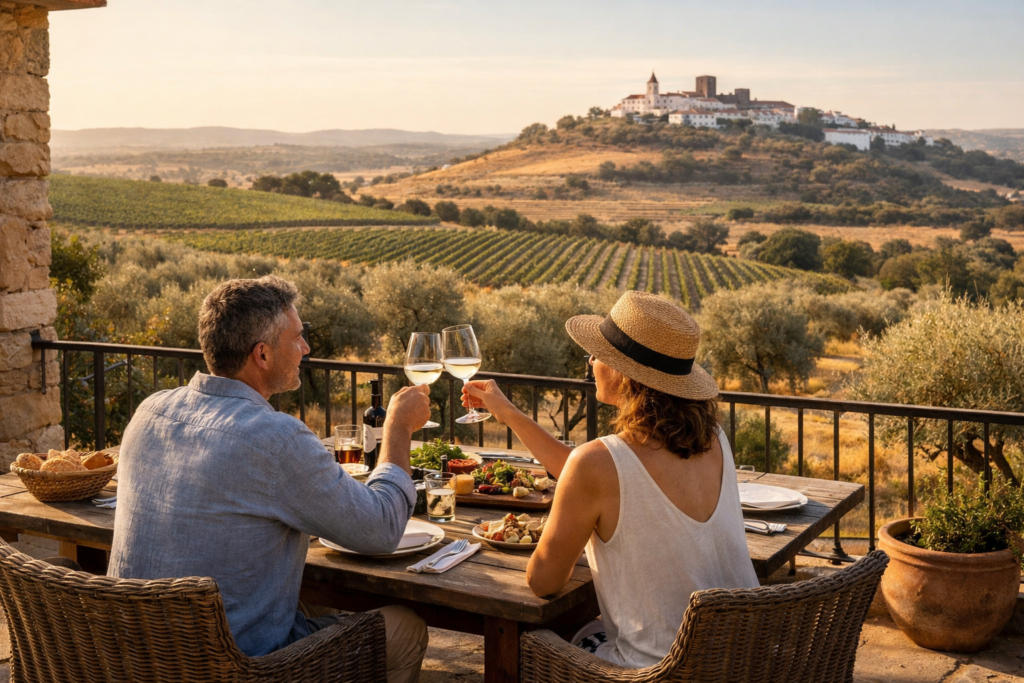
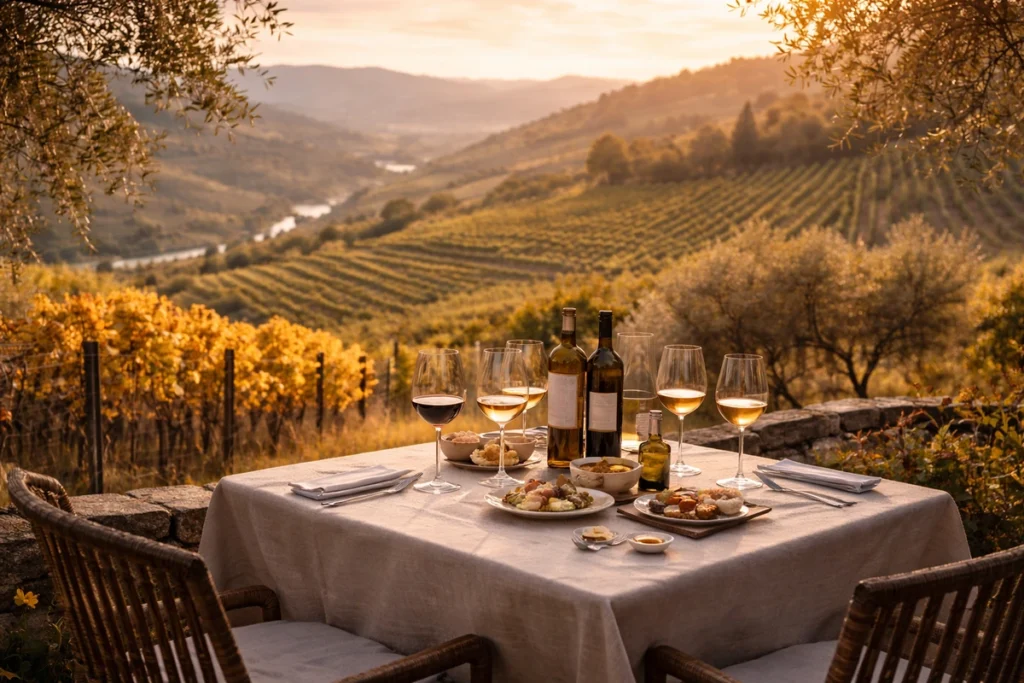
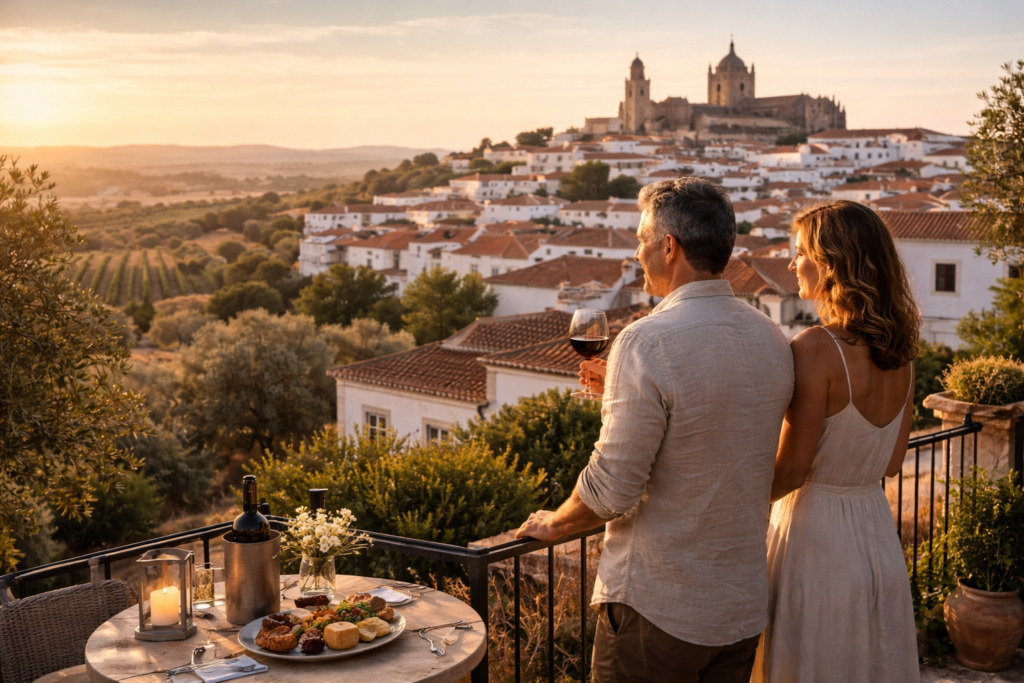
Alentejo is Portugal at its most spacious. The landscapes open up, the pace softens, and “tasting” becomes less about checking labels and more about sitting with a view: vineyards, olive groves, warm light, and long lunches built around regional flavour. This guide is for travellers who want an estate-led day that feels grounded and calm, combining wine and olive oil in a way that makes sense of place.
- At a Glance: Alentejo Wine and Olive Oil Experiences
- Why Alentejo is perfect for wine and olive oil
- What to expect from olive oil tastings (simple and not intimidating)
- The estate-led formats that work best in Alentejo
- How to plan the perfect Alentejo tasting day
- Two Ways to Do It (Slow Luxury or Lighter Pace)
- What to wear and how to keep it comfortable
- What makes an Alentejo estate feel truly “premium”
- Ready to Experience Alentejo by Vineyards and Olive Groves?
- FAQ: Alentejo Wine Estates and Olive Oil Tastings
- More Portugal Wine Estate Guides
- Explore Alentejo Travel Guides
At a Glance: Alentejo Wine and Olive Oil Experiences
- Best for: slow travellers, food lovers, couples, design-forward rural escapes
- Signature format: one estate visit with a tasting, then a long lunch with pairings
- Olive oil moment: a guided tasting that explains quality and style without intimidation
- Ideal duration: 4–7 hours for an estate-led half or full day
- Pacing rule: one main estate experience, then linger
To keep this guide consistently premium (and genuinely useful), we curate Alentejo estate experiences using a small set of non-negotiables—focused on slow pacing, olive-grove sense of place, and food-led pairings that make the day feel restorative rather than scheduled.
- To keep this guide consistently premium (and genuinely useful), we curate Alentejo estate experiences using a small set of non-negotiables—focused on slow pacing, olive-grove sense of place, and food-led pairings that make the day feel restorative rather than scheduled.
- Olive Groves as Part of the Story: We prioritise estates where olive oil is not an afterthought. The setting matters here—olive groves, regional ingredients, and a tasting that connects flavour to landscape.
- Food-Forward Pairings That Fit the Rhythm: We favour experiences where food supports the pace: small plates that explain the oils, or a long lunch where wines and oils are integrated naturally, not rushed between pours.
- Seated Comfort and Unhurried Hosting: Premium in Alentejo means seated tastings, shade or elegant indoor spaces in warm months, and hosting that adapts to your level without becoming technical or performative.
- Clarity on What You’re Booking: We prioritise estates that communicate the essentials upfront—duration, what’s included (wine flight, oil tasting, pairing or lunch), seating style, and timing—so your day stays predictable in the best way.
- Low-Friction Logistics: We curate for plans that are easy to execute—simple arrival points, sensible start times, and a clean finish that does not require extra driving late in the day.
- Quality Over Quantity: Our definition of “worth it” is simple: the Alentejo you remember for olive-grove light, relaxed terraces, and a long, flavour-led meal—not for how many places you managed to fit in.
A quick note on how we decide what to feature—and how partner links fit into this guide.
This guide is curated on merit. We select experiences based on research, reputation, and the quality of the guest outcome—not paid placement. Recommendations cannot be bought, and inclusion is never guaranteed in exchange for compensation.
Some links in this article may be partner or affiliate links. If you choose to book through them, we may earn a small referral benefit—at no extra cost to you. This does not influence which providers are featured, how options are described, or how we rank what stands out.
Why Alentejo is perfect for wine and olive oil
Wine estates in Alentejo often feel generous: space, calm service, and food that naturally leads the day. Olive oil belongs here too. Many estates sit among olive groves as much as vineyards, and tastings are a simple, satisfying way to understand the region’s flavour profile.
If you want a wine day that feels like a retreat rather than a route, Alentejo delivers.
What to expect from olive oil tastings (simple and not intimidating)
An olive oil tasting is usually guided and short, and it’s easier than wine in one important way: you learn a few cues and you can immediately taste the difference.
The basics you may be guided through
- Fruitiness: green apple, herbs, fresh grass notes in fresher oils
- Bitterness: often a sign of quality and polyphenols, not a flaw
- Peppery finish: that gentle throat “kick” is often a positive marker
- Freshness: olive oil is closer to fruit juice than to a forever pantry item
How it’s usually served
Small tasting cups or spoons, sometimes with bread, local cheese, or simple vegetables designed to show how the oil behaves with food.
The estate-led formats that work best in Alentejo
Wine tasting with an olive oil introduction
Best for: first-time visitors who want a sense-of-place snapshot
Often a guided flight of wines followed by a short olive oil tasting, then an optional shop stop.
Wine and olive oil pairing (the most sense-of-place format)
Best for: travellers who love flavour and want a curated experience
Expect a structured sequence: oil styles with regional bites, then wines that echo the same ingredients.
Long lunch with regional pairings
Best for: luxury travellers who want one memorable afternoon
This is where Alentejo shines. Lunch is often the centrepiece, with wines selected to match dishes built around local produce.
Private tasting (quiet, high-touch)
Best for: special occasions, privacy, slower pacing
A calmer, more personalised experience, often with better hosting and a more relaxed rhythm.
How to plan the perfect Alentejo tasting day
Alentejo is less about “how many places” and more about getting the timing right.
A pacing formula that rarely fails
- Choose one estate with a clear experience format
- Add one long lunch or pairing as the anchor
- Finish with a terrace pause or a slow coffee, not another stop
Ideal timing
- Late morning is the easiest start for tastings
- Lunch into mid-afternoon is the natural rhythm
- Late afternoon is perfect for a final glass and warm light across the groves
Two Ways to Do It (Slow Luxury or Lighter Pace)
Option A: The long-lunch escape (best for slow luxury)
- 11:00 Arrival and seated wine tasting
- 12:30 Olive oil tasting with regional bites
- 13:30 Long lunch with pairings
- 16:00 Terrace pause, then return without rushing
Option B: The flavour-led half-day (lighter, still premium)
- 11:30 Olive oil tasting and short pairing plates
- 13:00 Seated wine tasting flight
- 14:30 Easy lunch nearby or on-site, then finish
What to wear and how to keep it comfortable
- Smart-casual is perfect.
- Comfortable shoes help for gravel paths and estate grounds.
- In warmer months, prioritise shade, indoor tasting rooms, and earlier starts.
- Keep water constant. A calm afternoon is a hydrated afternoon.
What makes an Alentejo estate feel truly “premium”
- Seated tastings with a view or a calm interior space
- Clear pacing and hosting that doesn’t rush
- Food that is genuinely good, not an afterthought
- Olive oil presented as culture, not a sales pitch
- A setting that encourages lingering: terraces, gardens, olive groves
Ready to Experience Alentejo by Vineyards and Olive Groves?
For the calm, sense-of-place version, keep it beautifully simple: choose one excellent estate with a clear rhythm—an unhurried wine tasting, a guided olive oil tasting, and a long lunch (or pairing plates) designed to linger. With minimal transfers and a late-morning start, the day stays focused on olive-grove light, regional flavour, and terrace time—not logistics.
FAQ: Alentejo Wine Estates and Olive Oil Tastings
Share this guide
More Portugal Wine Estate Guides
Douro by River: Scenic Cruises & Wine Estates (A Calm, Curated Day)
Douro Day Trip vs Overnight Stay: What’s Worth It
Douro Valley Wine Estates: Best Tastings, Views & Vineyard Lunches
Private Wine Tastings in Portugal: When It’s Worth Upgrading
Wine Pairing Lunches in Portugal: Douro vs Alentejo (What’s Different)
How to Plan a Wine Estate Day in Portugal (Private Driver, Timing & Pacing)

Best Wine Estate Experiences in Portugal: Quintas, Tastings & Long Lunches
Portugal Wine Tastings: What to Expect (From Casual Flights to Private Pairings)
Best Seasons for Wine Estate Travel in Portugal (Crowds, Light, Lunch Culture)
Where to Base for Alentejo Wine: Évora vs Countryside Estates