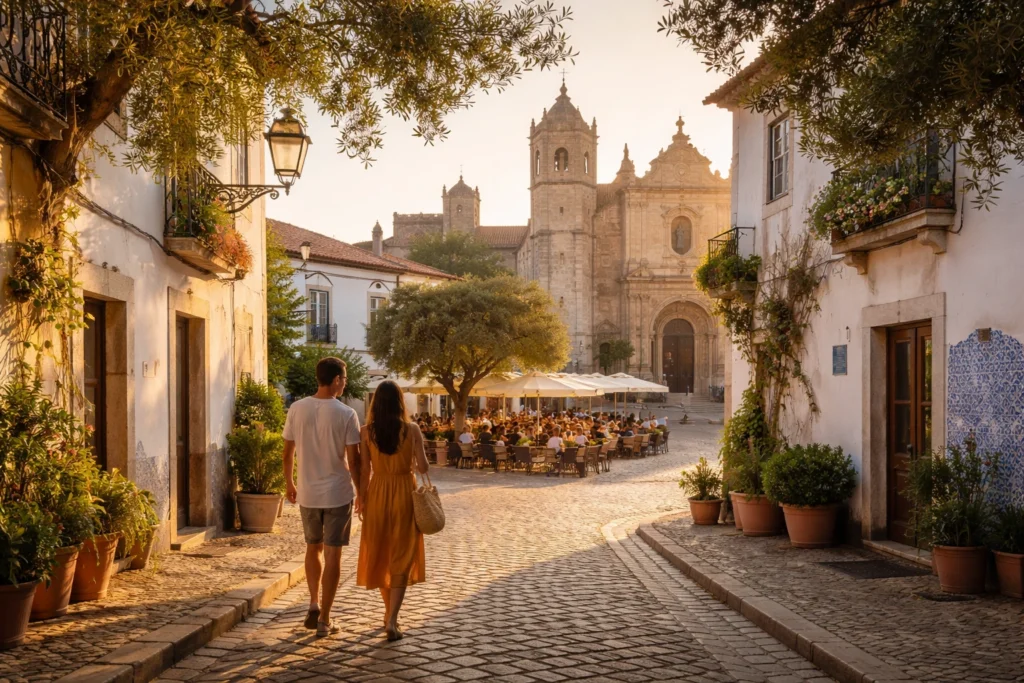
Porto rewards walking, but it is a city of slopes, steps, and “just one more viewpoint.” This route is designed to feel cultural and complete without becoming a workout: you’ll stay close to the river, choose your climbs carefully, and build in pauses for coffee, a calm glass of Port, and unhurried views.
- At a Glance: Porto Walks (Ribeira, Miragaia & Gaia Wine)
- The Core Route: Ribeira, Miragaia & Gaia
- Historic Café Pauses: Plan Them Like Chapters
- How to Absorb Porto Without Getting Tired
- Suggested Timing (Easy, Balanced)
- Ready to Plan Your Porto Walk?
- FAQ: Best City Walks in Porto
- More City Walks Guides in Portugal
At a Glance: Porto Walks (Ribeira, Miragaia & Gaia Wine)
- Route: Ribeira → Miragaia → Gaia (Vila Nova de Gaia)
- Best for: First-time visitors, culture lovers, wine fans, photographers
- Time: 3–6 hours (depending on cellar visit + viewpoints)
- Effort level: Moderate (easy if you use one lift/funicular or a short taxi)
- Best time: Late morning into sunset (for golden light over the river)
To keep this guide genuinely useful (and consistently premium), we curate Porto walks using a small set of non-negotiables—focused on river-led flow, high-reward viewpoints, and a gentle rhythm that respects Porto’s hills.
- Pace First (The Real Luxury): We prioritise walks that feel calm—linear routes with built-in pauses, so you can enjoy the river, architecture, and small details without turning the day into a workout.
- Riverfront Flow (Not a Checklist): Porto is best absorbed from the waterline outward. Our routes follow a natural sequence—Ribeira into Miragaia, then across to Gaia—so the walk feels like distinct chapters, not a list of landmarks.
- Views With Smart Effort: We choose viewpoints that deliver strong visual reward without demanding constant climbing. We also design routes where you can pick one “big view” (Porto or Gaia) rather than chasing every miradouro.
- Bridges as Moments (Not Obstacles): Crossings are curated for experience and comfort—choosing the lower deck for ease or the upper deck for panorama, with simple alternatives (funicular/lift/taxi) if you want the view without the uphill approach.
- Wine + Café Stops That Fit the Mood: We prioritise pauses that feel natural—historic cafés, calm terraces, and one well-chosen Port tasting—so the day is shaped by comfort and atmosphere, not rushing between “must-do” stops.
- Clarity & Flexibility: Each walk is easy to shorten or adjust. We keep start/end points intuitive, suggest the best time of day for light and crowd levels, and include simple pacing guidance so you can stay unhurried—especially on Porto’s steeper streets.
This guide is curated on merit. We select hotels and retreats based on research, reputation, and the quality of the guest experience—not on paid placement. Recommendations cannot be bought, and inclusion is never guaranteed in exchange for compensation.
Some links in this article may be partner or affiliate links. If you choose to book through them, we may earn a small referral benefit—at no extra cost to you. This does not influence which properties are featured, how options are described, or how we rank what stands out.
The Core Route: Ribeira, Miragaia & Gaia
Think of this as a “river-first” walk. You’ll feel Porto’s character from the waterline, then cross for wine and panoramic viewpoints.
1) Ribeira: start slow and stay low
Begin at the Ribeira waterfront when the streets are still calm. Keep your first hour flat: it sets the tone and saves energy for later.
Start by walking the river line rather than climbing into the lanes straight away. The goal here is to let Porto come to you—boats on the Douro, early light on the façades, and that gentle hum of cafés opening.
A good first loop is simply: promenade → one lane just above the waterfront → back to the promenade. You get texture (tiles, doorways, small balconies) without committing to steep streets.
Easy, high-reward moments in Ribeira
- Walk the riverside promenade at an unhurried pace and pause when the view opens toward the bridge.
- Dip into one or two small lanes just above the waterfront for a closer look at azulejos and old façades—then return to the river level.
- Take a short coffee break with a view (espresso or a pastel de nata). It’s less about “stopping” and more about setting the rhythm for the day.
- Spend a few minutes simply watching the river traffic—it’s one of the most effortless ways to feel Porto’s character.
Energy tip: If you’re tempted by a steep climb immediately, resist. Porto is better when you warm up gently—save your “one big climb” for later when you know exactly which viewpoint you want.
2) Ribeira to Miragaia: the quieter riverfront
Continue west along the Douro toward Miragaia, where the atmosphere often feels less busy and more local.
This stretch is Porto at its most walkable: flat, scenic, and naturally paced. Instead of chasing sights, let the riverfront guide you. You’ll notice the city shift from postcard-busy to calmer and more residential—ideal for a second pause before you cross to Gaia.
What to notice along the way
- Tile façades and small chapels tucked slightly back from the river—details you miss when you rush.
- Quieter terraces that work well for a short reset: water, coffee, or a light snack without breaking your flow.
- The way the riverfront opens and narrows—good places to stop for photos without feeling you’re in the way.
Optional micro-detour (only if you feel fresh):
Take a quick climb up to Miradouro das Virtudes for a layered view over rooftops and the river, then return the same way. Keep it deliberately short—think of it as your “one quick ascent” before the bridge and the wine.
3) Bridges: choose your crossing for the best views (and least effort)
From the riverfront, aim toward the Dom Luís I Bridge area for the classic Porto-to-Gaia transition.
Think of the bridge as a designed pause rather than a “get from A to B” moment. This is where Porto becomes panoramic: the river widens, the layers of rooftops stack up, and Gaia’s wine lodges come into view. The only decision you need to make is simple: easy crossing now, or bigger views with a little elevation.
Your two best options on Dom Luís I
- Lower deck (easy, direct): Ideal if you’re staying true to the “start low, stay comfortable” approach. It connects naturally from the Ribeira level and keeps the walk flowing without extra climbs.
- Upper deck (maximum panorama): If you want the classic sweeping view, choose the upper level—but treat it as your one intentional ascent, not something you repeat all day.
How to get the upper views without the uphill effort
If your legs are already feeling the cobblestones, use one smart assist:
- Take the Funicular dos Guindais up from near Ribeira, then walk a short, flatter approach to the upper deck viewpoint zone.
Pacing tip (premium version):
Cross at a calm hour, stop briefly mid-bridge for photos, then keep moving. Save your longer “sit and linger” moment for Gaia, where the wine terraces and viewpoints are made for it.
4) Gaia: wine cellars and a slower pace
Once you reach Vila Nova de Gaia, switch from “walking city” to “tasting city.” This is your built-in recovery phase: wider pavements, more terraces, and the natural invitation to sit down and let the view do the work.
Instead of trying to “do” Gaia, treat it as a single, well-chosen wine chapter. One lodge, one tasting, one calm pause. That’s where Porto feels premium—unhurried, deliberate, and easy to enjoy.
Choose your wine moment (two styles)
- Classic cellar visit + tasting (the cultural option): Ideal if you want a sense of history, ageing, and styles of Port. Pick one lodge and do it properly—tour + tasting—rather than hopping between cellars.
- Short tasting stop (the flexible option): Perfect if you prefer to keep moving. A quick flight gives you the flavour and the mood without committing to a full tour.
Best rhythm for wine + views
Plan your tasting for mid-afternoon. It creates a natural “reset” after the bridge crossing, and sets you up perfectly to walk (slowly) to one viewpoint for sunset.
Pacing tip: Keep the tasting calm and seated. A small snack with your wine turns it into a genuine break—not just another stop.
5) Viewpoints in Gaia: pick one “big view” (not three)
Gaia’s viewpoints are excellent, but the climbs add up quickly. The key is choosing one that matches your energy—and letting it be the highlight rather than the start of a new checklist.
Think of this as your final chapter: a single panoramic pause that closes the walk in the right mood.
Pick your viewpoint
- Jardim do Morro (easy, relaxed): The simplest choice with a soft, end-of-day atmosphere—ideal if you want sunset without feeling like you’re “earning” it.
- Mosteiro da Serra do Pilar viewpoint (iconic panorama): One of the most recognisable views over Porto and the river bend. It asks for a little more effort, but the reward is big—especially in golden hour.
How to decide (quick rule)
- If you already took the upper bridge views, choose Jardim do Morro and keep it gentle.
- If you stayed low all day and want one “wow” panorama, choose Serra do Pilar as your single climb.
Energy tip (hill-reducer): If you want the views but not the uphill, consider the Gaia cable car (when operating), or do a short taxi/Bolt hop and finish with an easy downhill stroll.
Historic Café Pauses: Plan Them Like Chapters
A well-timed café stop turns a walk into a cultural day.
Two easy, classic choices
- Café Majestic (Rua Santa Catarina): belle-époque interiors and a sense of old Porto (go earlier to avoid peak queues).
- Café Guarany (near Aliados): central, elegant, and convenient if you loop back through town.
How to use cafés smartly
- Keep the first stop short (coffee + water).
- Make the second stop your “reset”: a pastry, a seated break, and a quick look at your next segment.
How to Absorb Porto Without Getting Tired
Porto is “linear and physical” by nature, so the secret is designing your day with one climb, not constant climbing.
- Stay river-level early. Save stairs for later when you know what views you want.
- Choose one viewpoint on each side. Porto or Gaia, not every miradouro.
- Use one mobility helper. Funicular, cable car, or a short taxi ride makes the day feel effortless.
- Book one excellent wine lodge. A calm tasting beats rushing between cellars.
- Build in two seated moments. One café, one wine terrace. Culture lands better when you pause.
Suggested Timing (Easy, Balanced)
- 11:00 Ribeira wander + first coffee
- 12:00 Walk to Miragaia (slow, scenic)
- 13:00 Light lunch / riverside pause
- 14:30 Cross to Gaia (lower deck = easiest)
- 15:00 Cellar visit + tasting
- 17:00 Viewpoint (Jardim do Morro or Serra do Pilar)
- Sunset One last drink with a view
Ready to Plan Your Porto Walk?
Build a half-day you’ll actually enjoy: start by the river in Ribeira, pause for coffee, choose one high-reward viewpoint, then slow down over a Port tasting in Gaia. This route is designed to feel natural—more atmosphere than agenda.
FAQ: Best City Walks in Porto
Share this guide