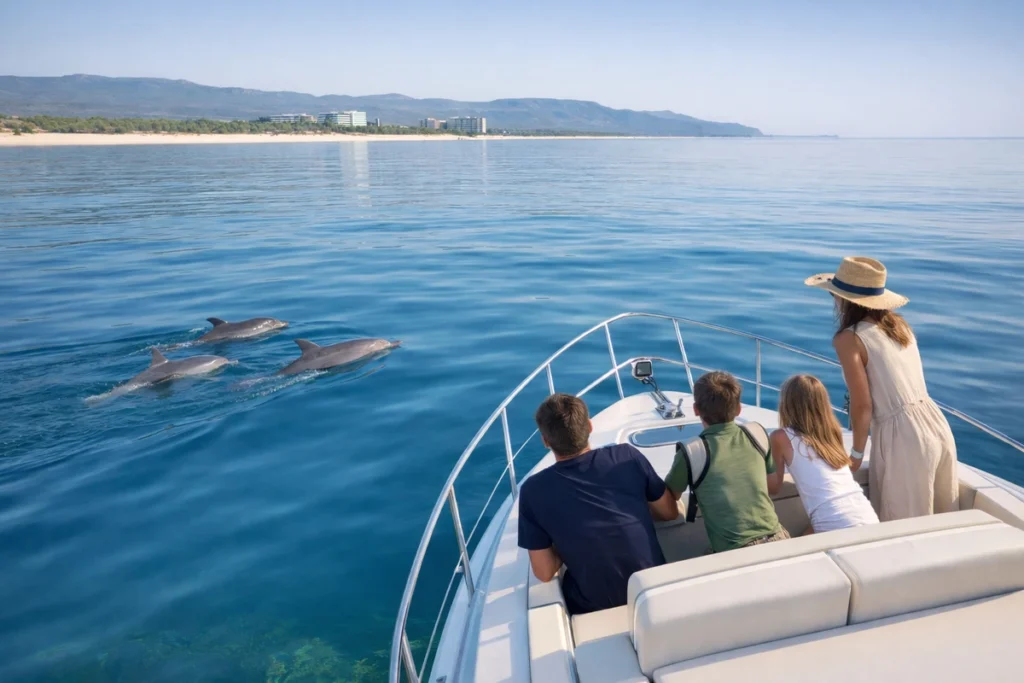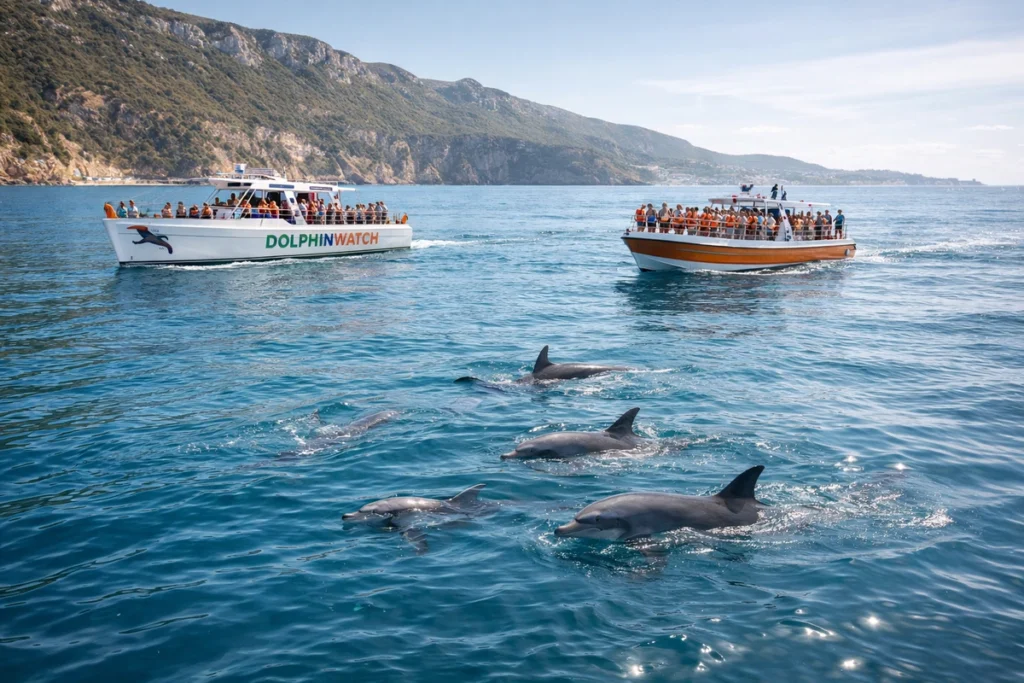
Dolphin watching in Portugal can be deeply rewarding when approached with the right expectations. This is not about spectacle or guarantees, but about being present in the natural habitat of wild animals, guided by operators who put respect and conservation first. This guide explains where dolphin watching makes sense, when to go, and how to choose ethical, low-impact experiences, so it fits naturally into a calm, well-balanced day.
- At a Glance: Portugal’s Top Dolphin and Whale Watching Experiences
- Algarve, Setúbal, Madeira or the Azores: Which Region Is Best?
- Choose Your Dolphin or Whale Watching Region
- What Makes a Dolphin-Watching Operator Ethical?
- Setting Realistic Expectations: Nature Comes First
- How to Fit Dolphin Watching Into a Calm Day
- When Is the Best Time to Go?
- What to Bring
- Who Is This Experience Best For?
- A Thoughtful Way to Experience Portugal’s Coast
- FAQ: Dolphin and Whale Watching in Portugal
- More Coastal Travel Guides
At a Glance: Portugal’s Top Dolphin and Whale Watching Experiences
- Best mainland regions: Algarve and Setúbal
- Best island regions: Madeira and the Azores
- Best for first-time visitors: Algarve or Setúbal
- Best for serious marine-life trips: Azores
- Best for a relaxed island holiday: Madeira
- Focus: ethical, low-impact operators
- Good to know: sightings depend on nature and should never be guaranteed
- Best time of day: early morning
- Ideal rhythm: short boat outing, long lunch, slow afternoon
Compare Responsible Dolphin-Watching Experiences in Portugal
For a smoother day, book a morning tour with clear timings, responsible wildlife guidelines and honest communication about sightings. The best operators focus on observation, education and respect for the animals’ natural behaviour.
To keep this guide genuinely useful (and consistently high-end), we evaluate dolphin-watching operators across Portugal using a small set of non-negotiables—focused on ethical practices, calm pacing, and an enjoyable, low-impact guest experience.
- Respect for Wildlife: Operators maintain safe distances, limit observation time, and avoid chasing or crowding dolphins. Sightings are never guaranteed, and the animals’ welfare comes first.
- Facilities & Comfort: Boats are well-maintained, stable, and designed for a comfortable observation experience. Life jackets, shaded areas, and easy seating support relaxed mornings at sea.
- Setting, Privacy & Calm Rhythm: Trips are kept small, with fewer passengers and controlled boat numbers. Routes and timing allow for calm mornings, minimal traffic, and a quiet connection with nature.
- Guidance & Insight: Knowledgeable guides provide context about local dolphin populations, species behavior, and conservation without sensationalism or hype.
- Clarity & Trust: Transparent information on tour length, time slots, booking policies, and cancellation rules ensures travellers know what to expect and can plan around a relaxed day.
This guide is curated on merit. We select dolphin-watching operators based on research, reputation, and the quality of the experience—not on paid placement. Recommendations cannot be bought, and inclusion is never guaranteed in exchange for compensation.
Some links in this article may be partner or affiliate links. If you choose to book through them, we may earn a small referral benefit—at no extra cost to you. This does not influence which operators are featured, how options are described, or how we rank the experiences.

Algarve, Setúbal, Madeira or the Azores: Which Region Is Best?
Portugal offers several excellent places for dolphin and whale watching, but they suit different trips. The Algarve and Setúbal are the easiest choices for most mainland itineraries. Madeira and the Azores are stronger if your trip already includes the islands, especially if you want a broader whale-and-dolphin-watching experience.
Algarve: Open Ocean, Cliffs and a More Adventurous Feel
The Algarve is one of the easiest regions for dolphin watching if you are already staying on Portugal’s southern coast. Departures usually run from coastal towns such as Lagos, Albufeira, Portimão and Vilamoura, with routes that may combine open water, sea caves and limestone cliffs.
- Landscape: Atlantic waters, cliffs, caves and wide coastal views
- Possible sightings: common dolphins, bottlenose dolphins and occasional larger cetaceans
- Vibe: more adventurous, often with faster boats
- Best for: travellers based between Lagos and Albufeira
- Best time: April to October for calmer conditions, especially in the morning
The Algarve works well if you want to keep logistics simple. Choose a short morning trip, return before lunch, and leave the rest of the day open for the beach, spa or a long meal by the water.
For a simple morning outing, compare Algarve dolphin-watching tours that clearly explain boat size, route, duration and wildlife guidelines.
Setúbal: Calm Waters, Sado Estuary and a Conservation Focus
Setúbal offers a different mood. Instead of open-ocean drama, the experience is more sheltered and educational, with the Sado Estuary and Arrábida Natural Park creating a beautiful natural setting close to Lisbon.
- Landscape: estuary waters, Arrábida hills, sheltered bays
- Possible sightings: the Sado’s bottlenose dolphins
- Vibe: calmer, slower and often more educational
- Best for: travellers staying in Lisbon who want a half-day nature escape
- Best time: year-round, with particularly pleasant conditions from late spring to early autumn
Setúbal is a strong choice if you want dolphin watching without building your whole day around the sea. It can be combined with a seafood lunch, a scenic drive through Arrábida or a relaxed afternoon by the coast.
If you are staying in Lisbon, compare Sado Estuary dolphin-watching tours with a responsible operator focused on calm observation and local marine life.
Madeira: Year-Round Dolphin and Whale Watching
Madeira is better described as a dolphin-and-whale-watching destination rather than a dolphin-only destination. The island’s deep Atlantic waters are close to shore, which makes boat trips from Funchal and other coastal areas especially appealing for travellers who want marine life as part of a relaxed island holiday. Madeira’s official tourism site lists species including common dolphins, spotted dolphins, bottlenose dolphins, sperm whales, pilot whales, Bryde’s whales and loggerhead turtles.
- Landscape: deep Atlantic waters, dramatic island coastline, wide ocean views
- Possible sightings: dolphins, pilot whales, sperm whales and other seasonal species
- Vibe: scenic, island-based and nature-led
- Best for: travellers already staying in Madeira
- Best time: year-round, with spring to autumn often best for sea conditions and variety
Madeira suits travellers who want ocean time without a rushed itinerary. A morning boat trip followed by lunch in Funchal, Câmara de Lobos or a coastal village can feel relaxed and memorable.
For a low-stress island experience, see Madeira dolphin and whale watching tours that use small groups, trained guides and responsible wildlife guidelines.
The Azores: Best for Serious Cetacean Watching
The Azores are one of Portugal’s strongest destinations for whale and dolphin watching. This is not usually a quick add-on to a mainland trip; it is best suited to travellers planning a nature-focused island itinerary. São Miguel, Pico and Faial are especially relevant depending on route, season and sea conditions.
- Landscape: volcanic islands, deep channels, open Atlantic waters
- Possible sightings: dolphins, sperm whales and seasonal migratory whales
- Vibe: serious, wildlife-focused and educational
- Best for: nature-led trips, slow island itineraries and marine-life enthusiasts
- Best time: spring for migratory whales; summer and early autumn for warmer conditions and dolphins
The Azores are ideal if marine life is one of the main reasons for your trip. The experience feels less like a simple excursion and more like part of a wider nature journey. The Whale Watching Handbook from the International Whaling Commission notes the importance of Portugal, including the Azores, for whale and dolphin watching, with sperm whales and several dolphin species present in Azorean waters.
For a deeper wildlife experience, compare Azores whale and dolphin watching experiences with operators that explain sea conditions, species seasonality and responsible approach rules.
Choose Your Dolphin or Whale Watching Region
The Algarve suits travellers already staying on the southern coast and looking for open-sea scenery. Setúbal works better as a calmer half-day trip from Lisbon. Madeira is ideal for a relaxed island holiday with ocean time, while the Azores are best for travellers who want a more serious cetacean-watching experience.
Suggested widget mix:
- 1–2 Algarve tours
- 1 Setúbal tour
- 1 Madeira tour
- 1 Azores tour
What Makes a Dolphin-Watching Operator Ethical?
Choosing the right operator matters more than choosing the right place. Responsible companies follow clear principles designed to protect wildlife and reduce stress for the animals.
Key signs of a responsible operator:
- Respectful distance: boats do not chase or crowd dolphins or whales
- Limited observation time: encounters are kept short to avoid disruption
- Controlled approach: the boat slows down and lets animals move naturally
- Trained guides: skippers and guides understand local marine life
- Clear communication: no guarantee of sightings
- Education-first tone: the tour explains behaviour, habitat and conservation
Ethical operators allow dolphins and whales to approach on their own terms — or not at all.
When comparing tours, look for clear language around respectful distance, limited observation time and no guaranteed sightings.
Setting Realistic Expectations: Nature Comes First
Dolphins and whales are wild animals. Even in regions with resident populations or frequent sightings, nothing should be promised. That uncertainty is part of the experience.
A responsible outing prioritises:
- Observation over interaction
- Patience over excitement
- Education over entertainment
- Quiet attention over spectacle
- Animal welfare over customer pressure
When dolphins or whales do appear, the experience feels more meaningful because it has not been forced.
How to Fit Dolphin Watching Into a Calm Day
Dolphin and whale watching works best as a short, early activity, not the centrepiece of an overfilled schedule.
A balanced approach:
- Early morning outing, usually around 2–3 hours
- Return by late morning
- Long lunch by the sea or in a nearby village
- Slow afternoon with beach time, spa time or a scenic drive
This rhythm keeps the day relaxed and avoids the feeling of chasing experiences.
For the most comfortable pace, choose a short morning dolphin-watching tour rather than a full-day programme with too many stops.
When Is the Best Time to Go?
Timing depends on region, season and sea conditions.
Algarve
April to October is generally the most appealing period, especially if you want warmer weather and calmer morning seas. Summer can be busy, so early departures are usually better.
Setúbal
Setúbal can work year-round, although late spring to early autumn often offers the easiest conditions for travellers combining it with a Lisbon stay.
Madeira
Madeira offers year-round possibilities, with resident and seasonal species. Spring to autumn is often especially appealing for weather, sea conditions and variety, while some species can be seen outside the main summer season.
Azores
The Azores are strongest as a dedicated whale-and-dolphin-watching destination. Spring is especially relevant for migratory whales, while summer and early autumn can be excellent for dolphins, warmer weather and broader island travel.
Best time of day
Early morning is usually best across Portugal. Seas are often calmer, the light is softer, and the experience fits naturally into a slower day.
If your dates are fixed, check morning dolphin and whale watching departures first and keep some flexibility in case sea conditions change.
What to Bring
Keep it simple and practical.
- Light jacket or wind layer
- Sunglasses
- Reef-safe sunscreen
- Hat with secure fit
- Water
- Camera strap
- Motion sickness tablets if you are sensitive to boats
- Comfortable shoes with grip
Avoid heavy bags and anything that needs constant attention. The less you manage onboard, the more present you can be.
Who Is This Experience Best For?
Dolphin and whale watching in Portugal suits travellers who enjoy nature, calm pacing and uncertainty. It is not ideal for anyone expecting guaranteed sightings or close-up interaction.
Best for
- Couples
- Families with older children
- Nature-focused travellers
- Slow luxury itineraries
- Lisbon travellers looking for a Setúbal day trip
- Algarve guests wanting a short sea experience
- Madeira or Azores travellers planning an island-based nature trip
Think carefully if
- You are very prone to seasickness
- You are travelling with very young children
- You only have one free hour in your itinerary
- You want a guaranteed result
- You dislike early starts
A Thoughtful Way to Experience Portugal’s Coast
Dolphin and whale watching, done well, is about connection rather than certainty. It suits travellers who value nature, calm pacing and responsible travel choices, and who are comfortable letting the experience unfold naturally.
The Algarve and Setúbal are the most practical choices for many mainland Portugal itineraries. Madeira and the Azores are stronger if your trip already includes the islands, especially if you want a broader marine-life experience with whales as well as dolphins.
FAQ: Dolphin and Whale Watching in Portugal
Share this guide